Building Diagnostics for Moisture, Air Leaks, HVAC, and IAQ Problems

If mold keeps coming back, the moisture source has not been found yet. 20+ years of South Florida building science. FL Licensed MRSA2944 | ACAC Certified

FL Mold Assessor License MRSA2944
ACAC Certified
IICRC S520  •  ASTM D7338-14
AIHA  •  ACGIH  •  AHERA Guidelines
Independent — Assessment Only

The Building Tells a Story. Reading It Is the Work.

Mold growth, moisture damage, and air quality failures are symptoms. Building science diagnostics identify the mechanism — why moisture is entering, where it is accumulating, and what the building assembly is doing that allows it to persist.

Coastal Air Assessments brings 20+ years of building science experience to every assessment. Instrument readings are interpreted in the context of construction type, climate exposure, HVAC design, and building age — not processed in isolation.

When building diagnostics is the right call

Musty room with no visible mold and no known water source
Mold that keeps coming back after remediation
Condensation on walls, windows, or floors that does not resolve
Roof or window leak with an unknown intrusion pathway
HVAC sweating, excessive humidity despite normal operation
New construction with moisture complaints before the first year is out
Post-remediation with occupants still reporting symptoms
Staining, peeling paint, or warped flooring with no obvious cause

Diagnostic instruments used in the field

Thermal Imaging Camera

Detects surface temperature differentials indicating moisture intrusion, missing insulation, air infiltration pathways, and envelope failures invisible to the eye. Every thermal anomaly is confirmed with contact-based instrumentation.

Protimeter MMS2

Quantified moisture readings in walls, floors, ceilings, and structural components. Systematic mapping that documents moisture levels across an entire building assembly, not spot readings at obvious locations.

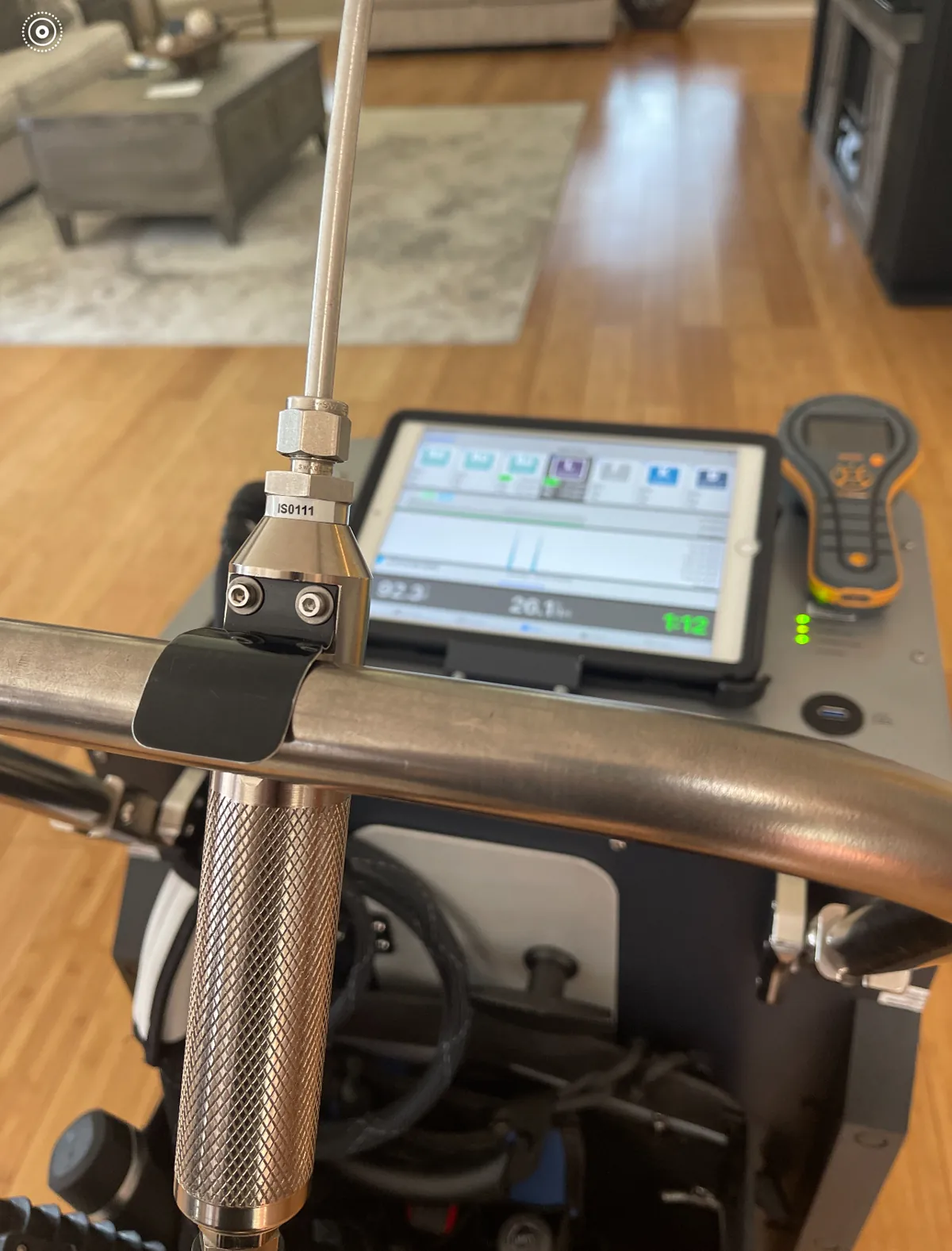
InstaScope

Real-time airborne mold detection that reads the building before guiding sample placement. Delivers on-site data in minutes rather than waiting for lab results to determine where the problem is concentrated.

ReachMaster Pro (Borescope)

Optical inspection of concealed wall cavities through a 3/8”–1/2” access hole. Deployed when moisture mapping and thermal findings specifically indicate potential concealed contamination — not as a default procedure.

Hygrometer Array

Ambient temperature and relative humidity measurements at multiple building locations to map vapor conditions and identify zones where condensation is likely to occur in South Florida’s climate.

Thermal imaging precision: Thermal imaging detects temperature differentials — not moisture content directly. Every thermal anomaly indicating potential moisture is followed with contact-based instrumentation for quantified confirmation. This methodology distinction is important for defensible reporting and accurate conclusions.

South Florida building science context

South Florida’s subtropical climate creates building science challenges specific to this region: exterior moisture drives inward through building assemblies against the normal vapor gradient, flat roofs common in regional construction have specific failure modes, and continuous air conditioning creates persistent cold surface condensation conditions. Regional expertise changes what you look for and how you interpret what you find.

Frequently Asked Questions

What is building diagnostics?
Building diagnostics finds the cause of moisture, mold, and air quality problems — not just the symptoms. It uses thermal imaging, moisture mapping, HVAC evaluation, and building envelope assessment to identify where moisture is entering and why it is persisting. Instruments tell you what. Building science tells you why.
When do I need building diagnostics instead of just mold testing?
When mold keeps returning after remediation, when you smell something but cannot find a source, when condensation or humidity problems do not resolve, or when a roof or window leak has an unknown pathway — building diagnostics finds the mechanism driving the problem. Testing alone tells you mold is there; diagnostics tells you why it keeps coming back.
Does thermal imaging find mold?
Thermal imaging detects temperature differentials that indicate moisture intrusion, not mold directly. Every thermal anomaly is followed with contact-based moisture instrumentation for quantified confirmation. This methodology is important for defensible, accurate conclusions — thermal anomalies alone are not a mold finding.
What tools does Coastal Air Assessments use?
Thermal imaging camera for surface temperature mapping, Protimeter MMS2 for quantified moisture readings in building materials, InstaScope for real-time airborne mold detection, ReachMaster Pro borescope for concealed cavity inspection when warranted, and hygrometer arrays for ambient conditions monitoring. Tools are deployed based on what the building and the complaint indicate — not applied by default.

Ready to schedule?

☎ (561) 400-0929 Request an Assessment

FL Licensed MRSA2944  |  ACAC Certified  |  IICRC S520
Schedule a Building Science Assessment

Find the root cause. South Florida expertise. Palm Beach, Martin & St. Lucie County.

☎ (561) 400-0929
Request an Assessment

FL Licensed MRSA2944 | ACAC Certified | 20+ Years Building Science Experience